21st October 2026 – 8th December 2026
BCS Moorgate, London

Oracle Machines Exhibition Opening Event - Wednesday 21st October 2026, 18:00

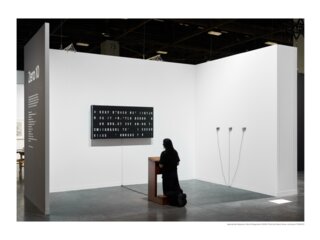
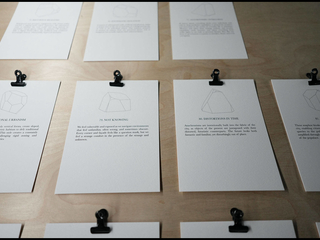
Oracle Machines is a 20 Print Exhibition with live artworks and video curated by Geoff Davis. It features work by Ana Maria Caballero, Geoff Davis, Kalen Iwamoto, Mario Klingemann, David Link, Tivon Rice, Sasha Stiles, Ivona Tau and Joseph Weizenbaum (ELIZA), alongside material documenting the history of oracles, the ELIZA chatbot, and current research. It will be on display at BCS Moorgate, London from 21st October 2026 until 8th December 2026. Entry is free for BCS members and their guests. An online version of the exhibition, with catalogue, will be made available on the CAS website a week before the opening.

About the Exhibition

Curator Geoff Davis is not presenting a tidy history of computational text. He's asking why people keep building systems to extract meaning from things that don't contain any.

Oracle Machines is an exhibition exploring the long relationship between humans, machines and the desire to obtain answers. It brings together computer text generation and art, poetry, AI and contemporary digital practices, tracing a path from early experiments in machine-generated language to today's AI systems.

The impulse is older: the reading of bones, entrails and tea leaves, a book opened at random, the question or the prompt, put to something that cannot answer, but answers anyway.

Oracles do not have to be right, only open to interpretation. The answer is vague, so interpreting it correctly becomes the questioner’s responsibility. A prophecy that fails has been misread, not mistaken. AI systems enjoy much the same protection. When they invent an answer, we blame the prompt, not the oracle, and keep asking.

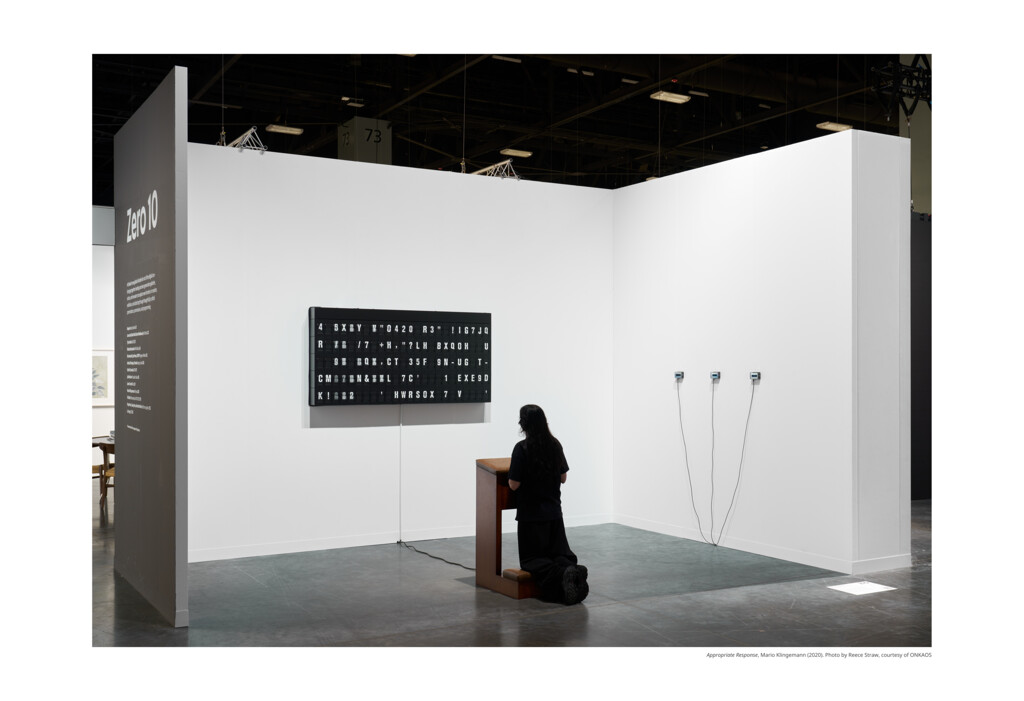
The print display includes work by Ana Maria Caballero, Geoff Davis, Kalen Iwamoto, Mario Klingemann, David Link, Tivon Rice, Sasha Stiles, Ivona Tau and Joseph Weizenbaum (ELIZA), alongside material documenting the history of oracles.

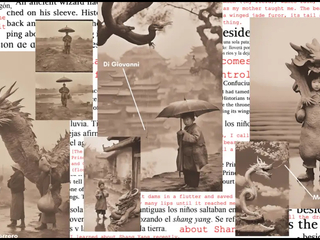
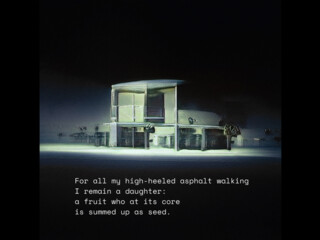
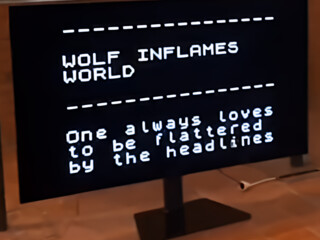
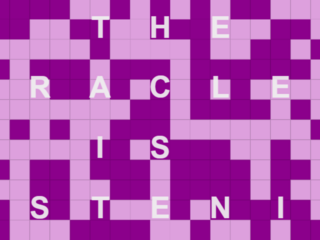
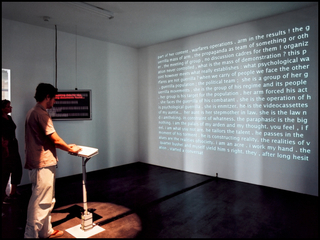
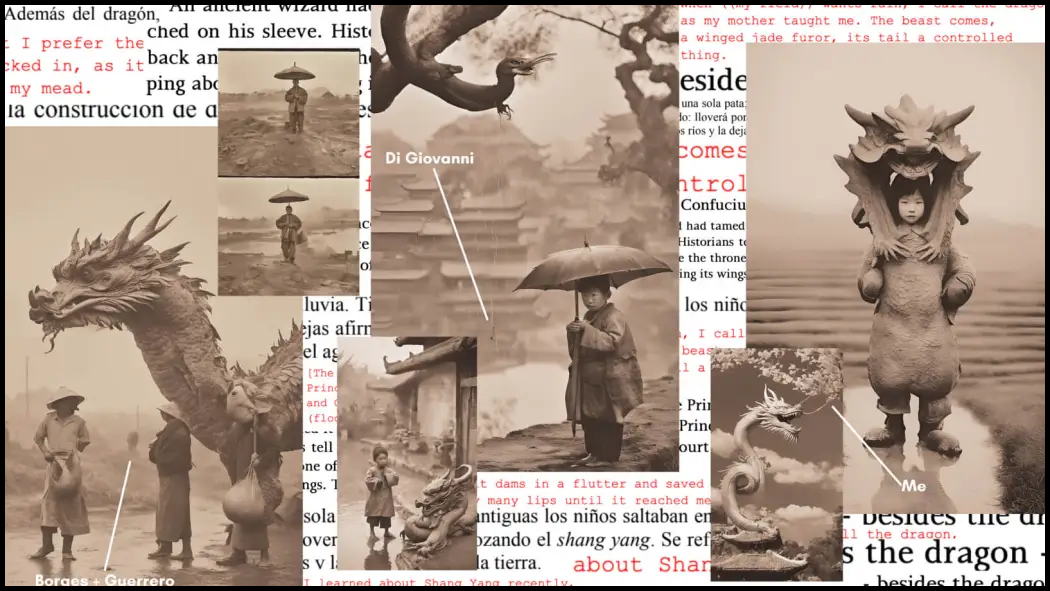
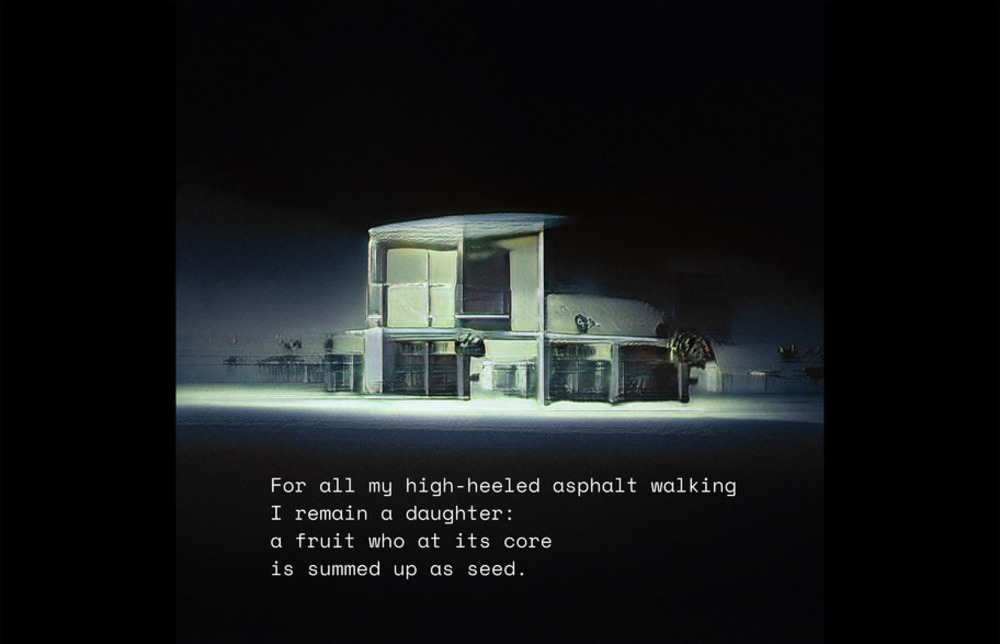
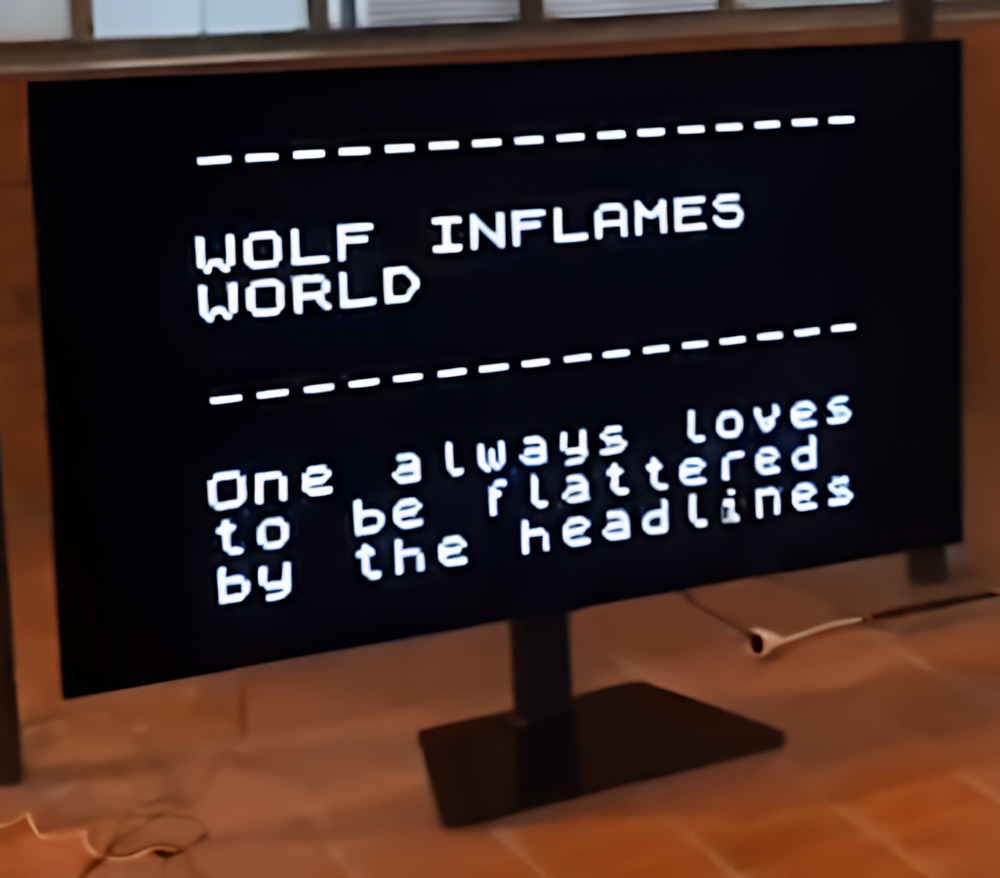
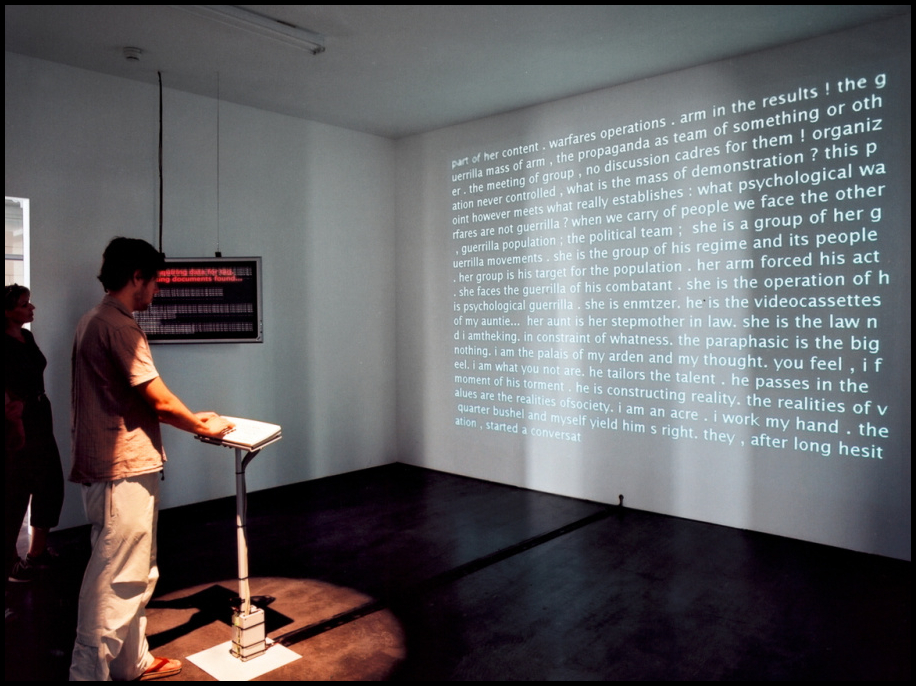
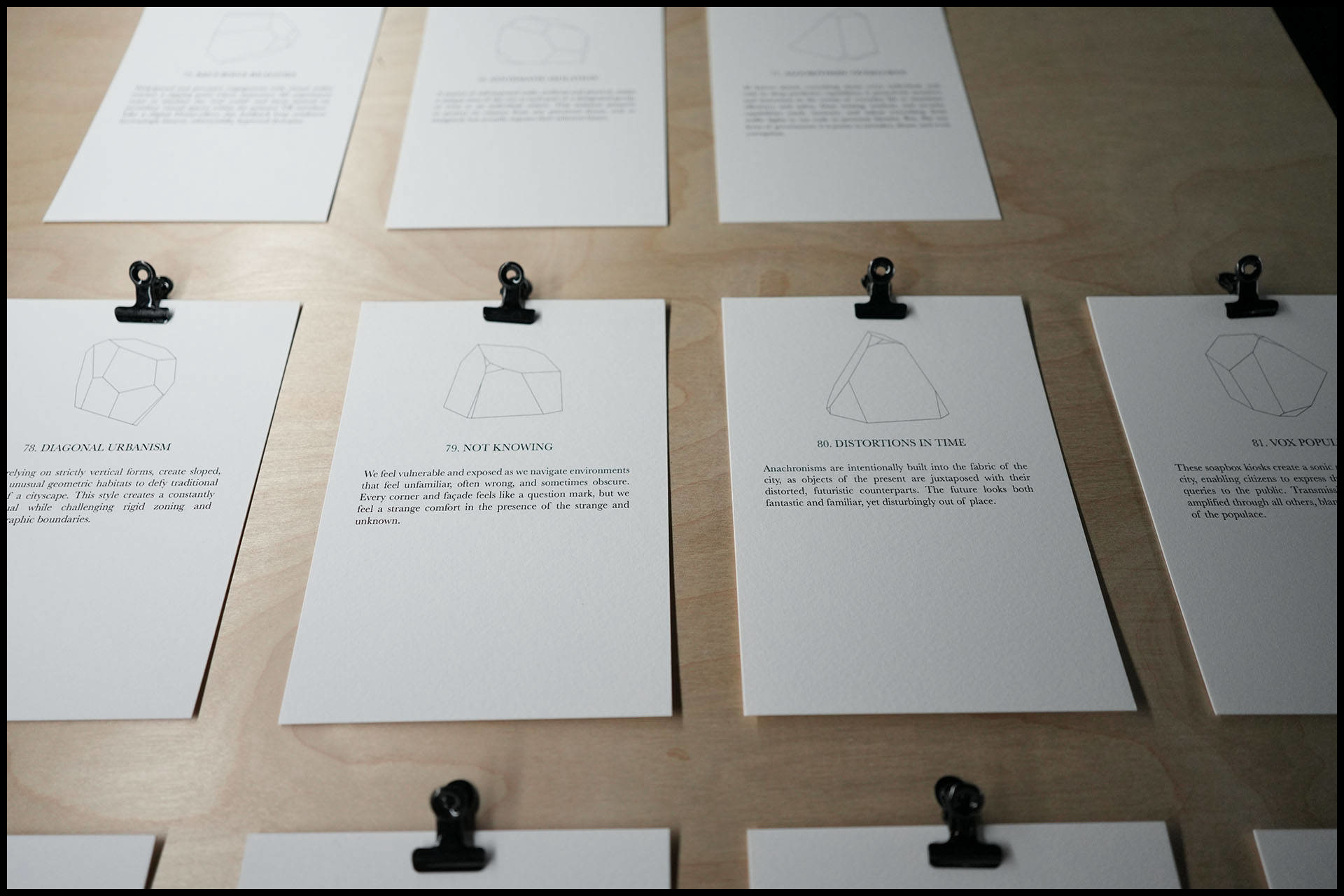
Works include Stiles' Repetae Ars Autopetica, Link's Poetry Machine, Caballero's Being Borges, Iwamoto’s The Writing On The Wall, Rice's Pattern Language, and other text-based and generative works. Tell Me More by Geoff Davis is an algorhymic oracle that displays art and phrases drawing on the I Ching, humanistic counselling, speculative fiction and film.

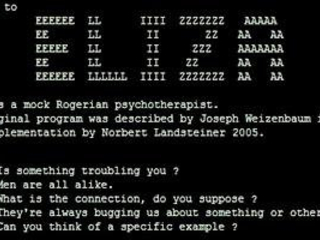
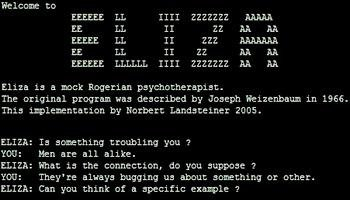
Historical material includes Story Generator (1985) by Micro Arts and documentation of ELIZA (1966), one of the earliest and most influential experiments in computer conversation. Users confided in a program of a few hundred lines that did little more than turn their statements back into questions, and its author was troubled by how readily they did so.

The Atrium installations include David Link's Poetry Machine, commissioned by ZKM in 2001, Story Generator and Tell Me More, and other related works.

A video showreel brings together the exhibition's works with explanatory captions, accompanied by a Catalogue providing further historical and artistic context.

About the Artists

Ana Maria Caballero
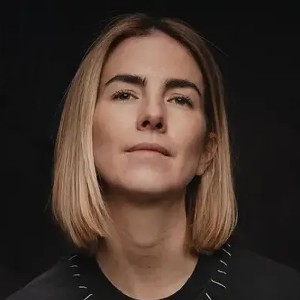
Artist

Ana Maria Caballero

Ana María Caballero is an award-winning Colombian-American poet and multidisciplinary artist whose work explores embodiment, memory, care and the cultural ethics of emerging technologies. Working across poetry, books, performance, moving image, sound, code and generative systems, she investigates language as material and encounter, and how computational processes can make exchanges between language, body and reader visible. She is a Lumen Prize winner and recipient of an Academy of American Poets Prize, International Beverly Prize and Colombia’s José Manuel Arango National Poetry Prize. Her work is held by the Reina Sofía, MACBA, Ashmolean Museum and Fundación March, and has been exhibited at the V&A, HEK Basel and Tate.

Geoff Davis

CASCOM, Artist, Speaker

Geoff Davis

Geoff Davis is a pioneering generative artist, writer, musician and AI researcher whose practice explores text, technology and creativity. He founded Micro Arts in London in 1984, creating and distributing computer art and story generators on data cassettes and Prestel Teletext network. His work has been exhibited internationally since 1985 and is held in collections including the Computer Arts Archive, Francisco Carolinum Museum, Franke Foundation, The National Museum of Computing and Le Random. A PEN-published fiction writer, he has also produced creativity software, worked in music, taught at universities and art colleges, and researched interfaces, AI and electronic art. He serves on the Computer Arts Society committee.

Kalen Iwamoto

Speaker, Artist

Kalen Iwamoto

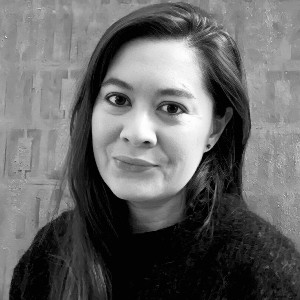
Kalen Iwamoto is a Canadian-Japanese conceptual artist and writer based in France. Working across art, language and technology, she works alongside her partner, Julien Silvano, as the artist duo Wen New Atelier. Their polysemic works, at once playful and critical, explore the ambivalence of contemporary digital life and alternative ways of imagining, using and relating to text and technology. Their work has been exhibited in France and internationally, including a recent solo exhibition at the Lyon Contemporary Art Museum. They are 2025 Lumen Prize finalists. She co-founded theVERSEverse, a poetry collective dedicated to digital poetry, and has developed blockchain-based and computational writing practices. In 2026, she joined the Banff Centre’s Computational Writing residency faculty.

Mario Klingemann

Speaker, Artist

Mario Klingemann

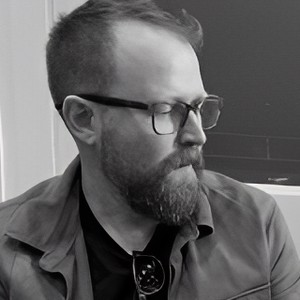
Mario Klingemann is a Munich-based artist who has spent over thirty years building his own instruments: algorithms, neural networks, archives and feedback loops. His work sits at the edge of authorship, asking what remains of the artist once making is handed to a machine. He conceived Botto, the autonomous artist, and created Memories of Passersby I, an AI installation sold at Sothebys. From 2016 to 2018 he was artist in residence at the Google Arts & Culture Lab, and has worked with the British Library, Cardiff University and New York Public Library on digital archives. His work has been shown at the Barbican, Photographers’ Gallery, MoMA, Centre Pompidou, ZKM, and is held by the V&A. He won the 2018 Lumen Prize Gold.

David Link

Speaker, Artist

David Link

Dr David Link is an artist, programmer and conceptualist whose practice explores the relationships between computation, language, machines and human thought. His work combines software, generative systems, media archaeology and philosophical research, often reconstructing forgotten or obsolete technologies to reveal their contemporary significance. His Poetry Machine, an autonomous text-generating system, was commissioned by and entered the permanent collection of ZKM, while his reconstruction of Christopher Strachey’s 1952 Love Letters programme received the British Computer Society’s Tony Sale Award. His installations have been exhibited at ZKM, dOCUMENTA(13), the Vienna Biennale, Centre Pompidou and numerous international institutions. His research focuses on algorithmic artefacts, generative literature and the archaeology of computation.

Tivon Rice

Artist

Tivon Rice

Tivon Rice is an artist and educator based in Seattle whose work explores digital culture, technology, representation and communication through film, installation, sculpture and AI-generated narratives. He holds a PhD in Digital Art and Experimental Media from the University of Washington and was a Fulbright scholar in Korea in 2012. Rice was among the first artists to collaborate with Google Artists + Machine Intelligence and is an affiliate of the University of Washington eScience Institute. His work has been exhibited internationally in New York, Los Angeles, Seoul, Taipei, Amsterdam, London, Berlin and São Paulo. His projects often combine emerging technologies with photography, cinema and physical materials.

Sasha Stiles

Artist

Sasha Stiles

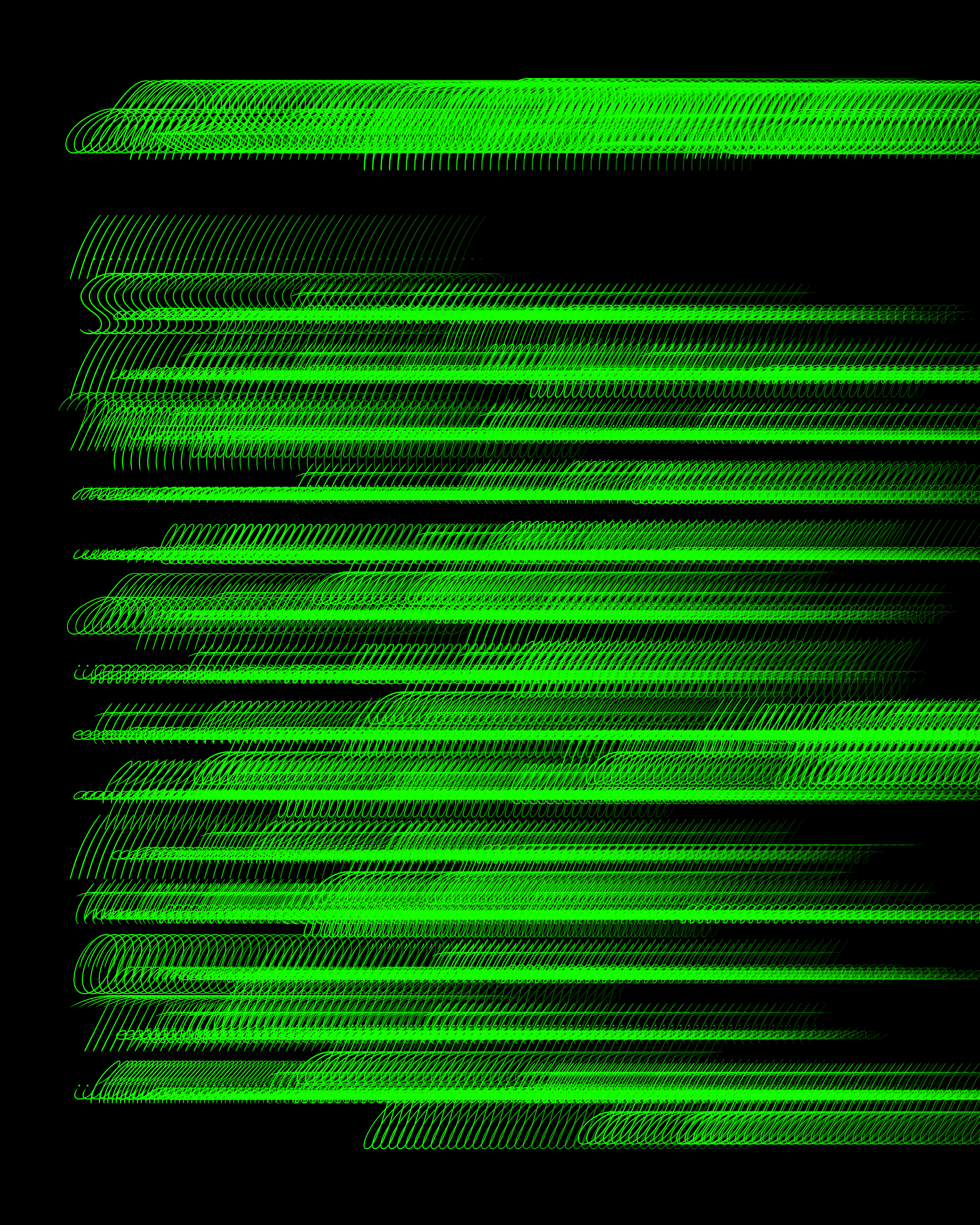
Sasha Stiles is a Kalmyk-American poet, artist and language researcher exploring what it means to be human in a more-than-human world. Working across poetry, generative systems, code and installation, she reimagines poetry as a computational medium. Her pioneering book Technelegy (2021), created with her AI alter ego, fuses human verse with machine-generated language. Her work A LIVING POEM, exhibited at MoMA in 2025–26, is an infinite text that rewrites itself every 60 minutes using a language model and custom datasets. Its words appear in Cursive Binary, her typeface combining handwriting and binary code. She is co-founder of theVERSEverse. Her work has been exhibited at ZKM and is held in collections including HEK Museum and Kunstmuseum Bern

Ivona Tau

Artist

Ivona Tau

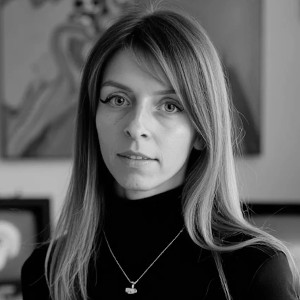
Ivona Tau is a photographer and artist working across generative AI, computer vision and conceptual image-making. She holds a PhD in Artificial Intelligence from the Polish-Japanese Academy of Information Technology and is based between Warsaw and Vilnius. She develops custom-trained neural networks from personal and collective photographic archives, treating each model as a partial, unstable form of memory. Her work explores memory, reconstruction, archives and the shifting boundary between documentation, speculation and synthetic imagery. Her work has been exhibited internationally, including at bitforms gallery, Christie’s, Unit London, Galerie Met and the V&A. She was a 2025 Lumen Prize finalist and a Speculative Agency Award winner.

Joseph Weizenbaum

Joseph Weizenbaum

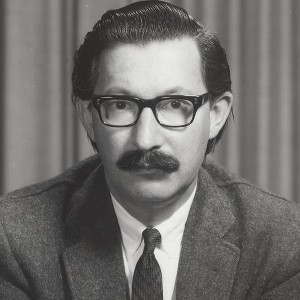
Joseph Weizenbaum was a Professor of Computer Science at MIT, where his work on ELIZA fundamentally shifted artificial intelligence philosophy. By proving simple scripts could manipulate emotions, his research laid the groundwork for modern human-computer interaction and AI anthropomorphism. Weizenbaum later pivoted to technology ethics, publishing Computer Power and Human Reason in 1976 and lecturing globally on automation's limits. Today, MIT's archives and the Computer History Museum preserve his artifacts. Furthermore, Berlin's Weizenbaum Institute was founded in his honour to research digital ethics, ensuring his warnings remain central to tech policy.