Peter Zinovieff and Electronic Music Studios
James Gardner
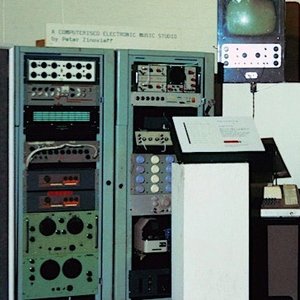 Title: Peter Zinovieff and Electronic Music Studios
Date: 24th November 2024
Speaker: James Gardner
Summary
James Gardner traces Peter Zinovieff's evolution from frustrated tape-editor to pioneer of computer-controlled electronic music, focusing on his collaborations with electronics engineers Mark Dowson and David Cockerell and computer programmer Alan Sutcliffe. He describes how Zinovieff's Putney garden studio, famously built around a PDP-8 computer acquired in 1967, became the site of landmark hybrid digital-analog experiments including the Unit Delta Plus Watermill concert, the IFIP competition piece ZASP, and the Queen Elizabeth Hall première of March probabilistic. Gardner also covers the whistle interface at the 1968 Cybernetic Serendipity exhibition, the founding of EMS, and the leap to the Synthi 100 synthesiser, whose advanced digital sequencer distinguished it from earlier analogue sequencers and tied directly to the Leicester restoration project.
Generated by AI using kimi-k2.7-code (3rd September 2026).